2026 Cost Guide
How Much Does a Disability Ramp Cost in 2026?
Quick Answer: The average cost of disability ramp installation in 2026 is $2,500. Typical range: $1,000 – $5,000 ($100 – $250 per linear foot).
Source: ClearCost Fair Market Rate data — updated April 2026
National Average
$2,500
Typical range: $1,000 – $5,000
$100 – $250 per linear foot
Cost at a Glance
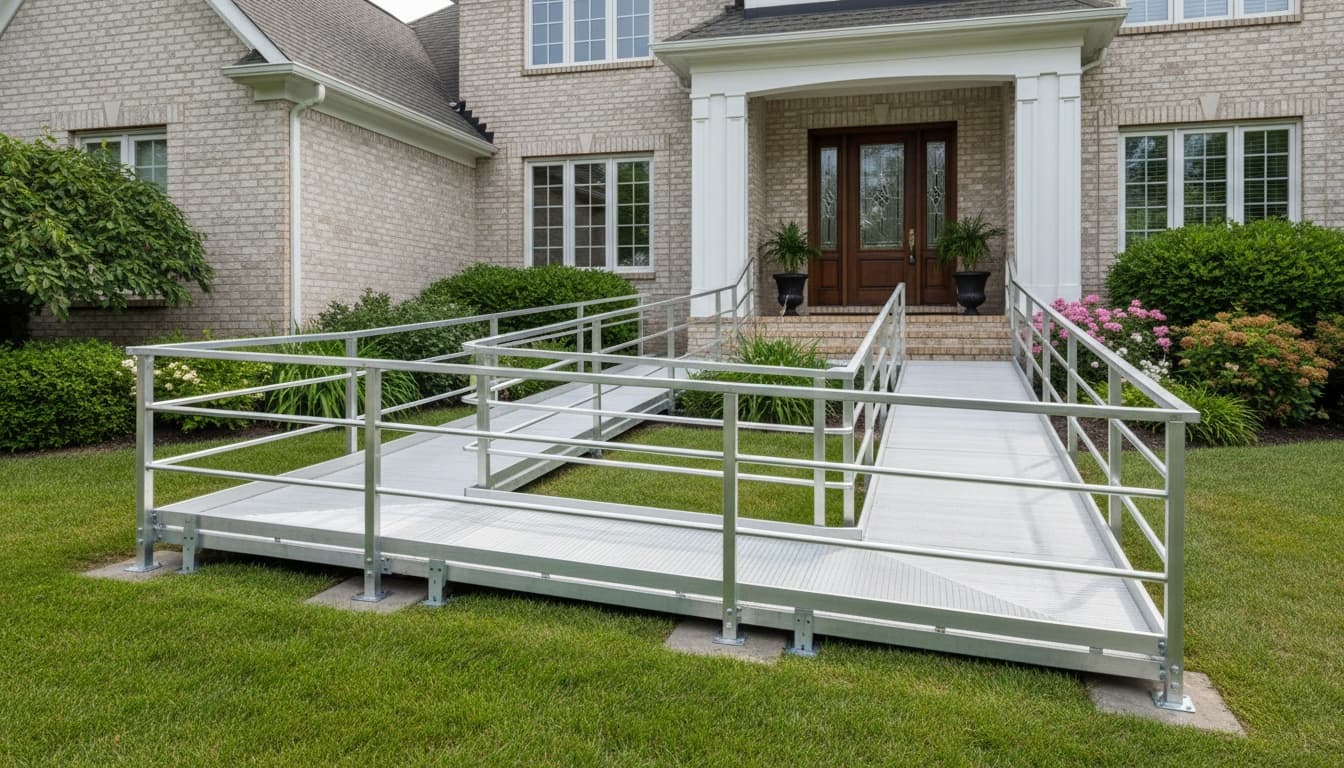
A wheelchair ramp or accessibility ramp provides safe, independent access to your home and is often essential for aging in place, injury recovery, or permanent mobility needs. The national average cost for a disability ramp in 2026 is approximately $2,500, with most homeowners spending between $1,000 and $5,000. ADA guidelines require a 1:12 slope ratio (1 inch of rise per 12 inches of ramp length), meaning a home with 30 inches of entry height needs at least a 30-foot-long ramp — often configured in switchback or L-shaped layouts.
Cost by Material
Wheelchair ramps are built from three main materials: wood, aluminum, and concrete. Wood ramps are the most common for residential use because they can be built to match your home's style and are relatively affordable, though they require regular maintenance (staining, sealing). Aluminum modular ramps are pre-engineered, install quickly, and are virtually maintenance-free — they are also portable if you move. Concrete ramps are the most durable and permanent option, ideal for front entries where aesthetics matter, but they are the most expensive and cannot be modified or relocated.
Cost per Linear Foot by Material
Cost by Rise Height
The height your ramp needs to overcome is the biggest driver of total cost because ADA-compliant slope ratios dictate the minimum ramp length. A one-step entry (6–8 inches) needs only a 6–8 foot ramp, while a three-step entry (24–30 inches) requires 24–30 feet of ramp length, often with one or more intermediate landings and a switchback configuration. Landings are required at the top, bottom, and every 30 feet of run, and must be at least 5 feet by 5 feet.
Estimated Total Cost by Rise Height (wood ramp)
Local pricing for disability ramp installation is coming soon
We're building a Fair Market Rate™ calculator for this project type. Get notified when it launches.
Labor Costs
$40 – $80 per hour
Labor typically represents 50–60% of a wood ramp installation. A two-person crew can build a simple straight ramp in 1–2 days. Switchback or L-shaped configurations with multiple landings take 2–4 days. Modular aluminum ramps install much faster — often in half a day — because they use pre-fabricated sections that bolt together.
Enhancement & Improvement Costs
What Drives the Cost
- Rise height — every inch of height adds 12 inches of required ramp length (ADA 1:12 ratio)
- Material — aluminum and composite cost more upfront but require less maintenance
- Configuration — switchbacks and L-shapes cost more than straight runs due to landings
- Site conditions — sloped yards, poor drainage, or soft soil may require additional foundation work
- Permit and code requirements — local codes may exceed ADA minimums
Pro Tips
- Check with your local Area Agency on Aging or VA office for grant programs before paying out of pocket
- Consider a modular aluminum ramp if you may move — they can be disassembled and reinstalled
- Always install handrails on both sides for safety, even if not strictly required by code
- Choose composite or aluminum over wood if you want minimal long-term maintenance
- Make sure the ramp landing is level with your door threshold to avoid a tripping hazard
Portable ramps can be installed in a few hours. Wood ramp construction takes 2–5 days depending on length and complexity. Concrete ramps take 1–2 weeks including excavation, forming, pouring, and curing. Modular aluminum systems install in 4–8 hours.
Frequently Asked Questions
Are there grants or assistance programs for disability ramps?
Yes — several programs can help cover costs. The VA provides free ramp installation for qualifying veterans through the HISA grant. Many states and counties offer home modification grants through Medicaid waiver programs, Area Agencies on Aging, or Community Development Block Grants. Nonprofit organizations like Rebuilding Together and local volunteer groups also build ramps at no cost for qualifying homeowners.
Does a ramp need a building permit?
In most jurisdictions, yes — a permanent ramp attached to a home requires a building permit. The permit process ensures the ramp meets ADA slope requirements, structural codes, and setback rules. Portable or temporary modular ramps may be exempt in some areas. Always check with your local building department before construction begins.
How long does a wood ramp last?
A well-built, properly maintained pressure-treated wood ramp lasts 15–20 years. Composite decking materials extend the lifespan to 25–30 years with virtually no maintenance. Aluminum modular ramps can last 30+ years. Regular inspection for loose fasteners, rot, and structural integrity is important regardless of material.
Local pricing coming soon
We're adding Fair Market Rate™ estimates for disability ramp installation. Enter your email to be the first to know.
Disability Ramp Installation Cost by City
Local estimates adjusted for regional labor and material costs.
New York, NY
$1,125 – $5,625
Los Angeles, CA
$1,125 – $5,675
Chicago, IL
$1,025 – $5,175
Dallas, TX
$1,025 – $5,150
Houston, TX
$975 – $4,925
Atlanta, GA
$1,000 – $5,000
Washington, DC
$1,175 – $5,825
Philadelphia, PA
$1,025 – $5,175
Miami, FL
$1,150 – $5,700
Phoenix, AZ
$1,025 – $5,075
Boston, MA
$1,100 – $5,475
Riverside, CA
$1,050 – $5,250