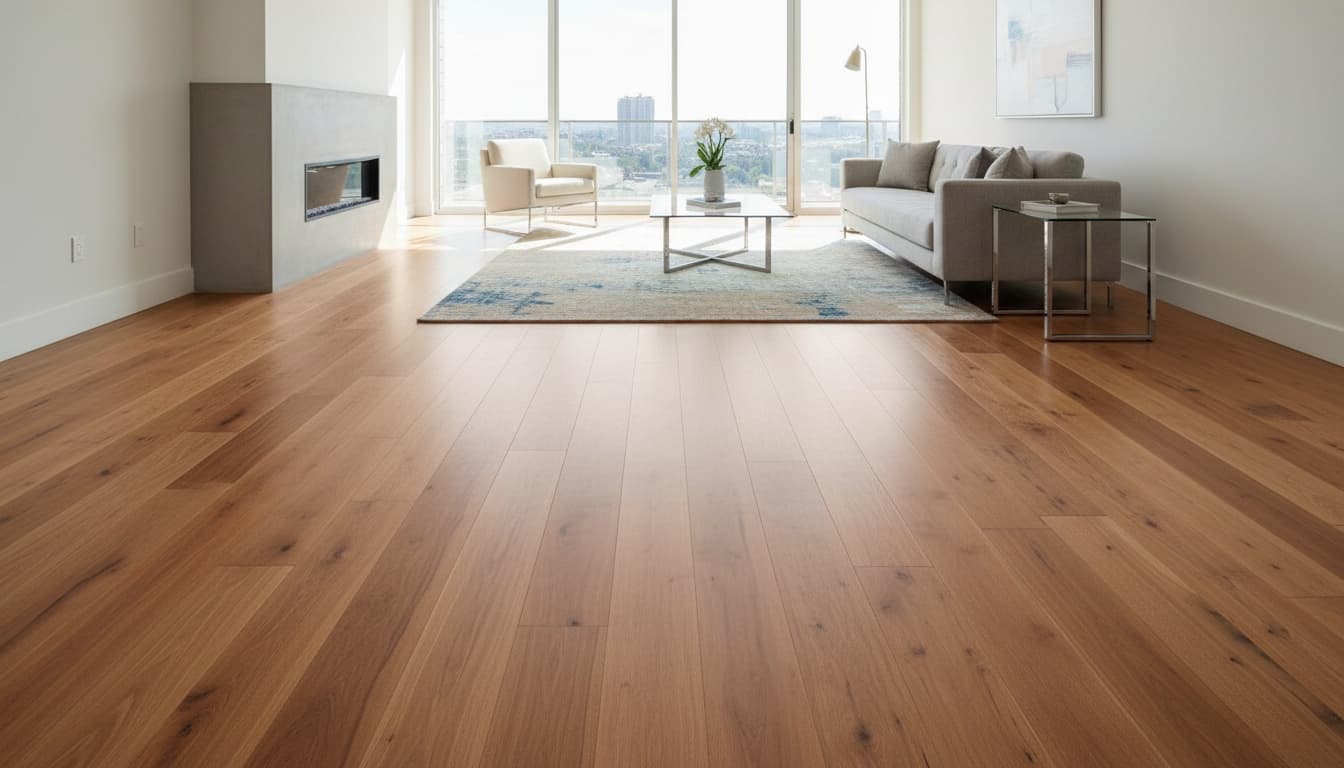
2026 Cost Guide
How Much Does New Flooring Cost in 2026?
Quick Answer: The average cost of flooring in 2026 is $8,500. Typical range: $4,000 – $15,000 ($3 – $15 per sq ft (installed)).
Source: ClearCost Fair Market Rate data — updated April 2026
National Average
$8,500
Typical range: $4,000 – $15,000
$3 – $15 per sq ft (installed)
Get Local EstimateCost at a Glance
New flooring transforms the look and feel of every room in your home. The cost varies dramatically by material — luxury vinyl plank (LVP) is the most popular choice for its combination of durability, water resistance, and affordability. Hardwood remains the gold standard for perceived value and buyer appeal. Most homeowners replace 500–1,500 sq ft of flooring at a time. The national average for a full-home flooring project is around $8,500.
Cost by Flooring Material
Flooring material is the biggest decision you’ll make and directly determines both the look and the total cost of your project. Laminate and LVP are the budget-friendly workhorses, tile excels in wet areas, and hardwood offers unmatched warmth and resale value. Each material has trade-offs in durability, water resistance, maintenance requirements, and installation complexity.
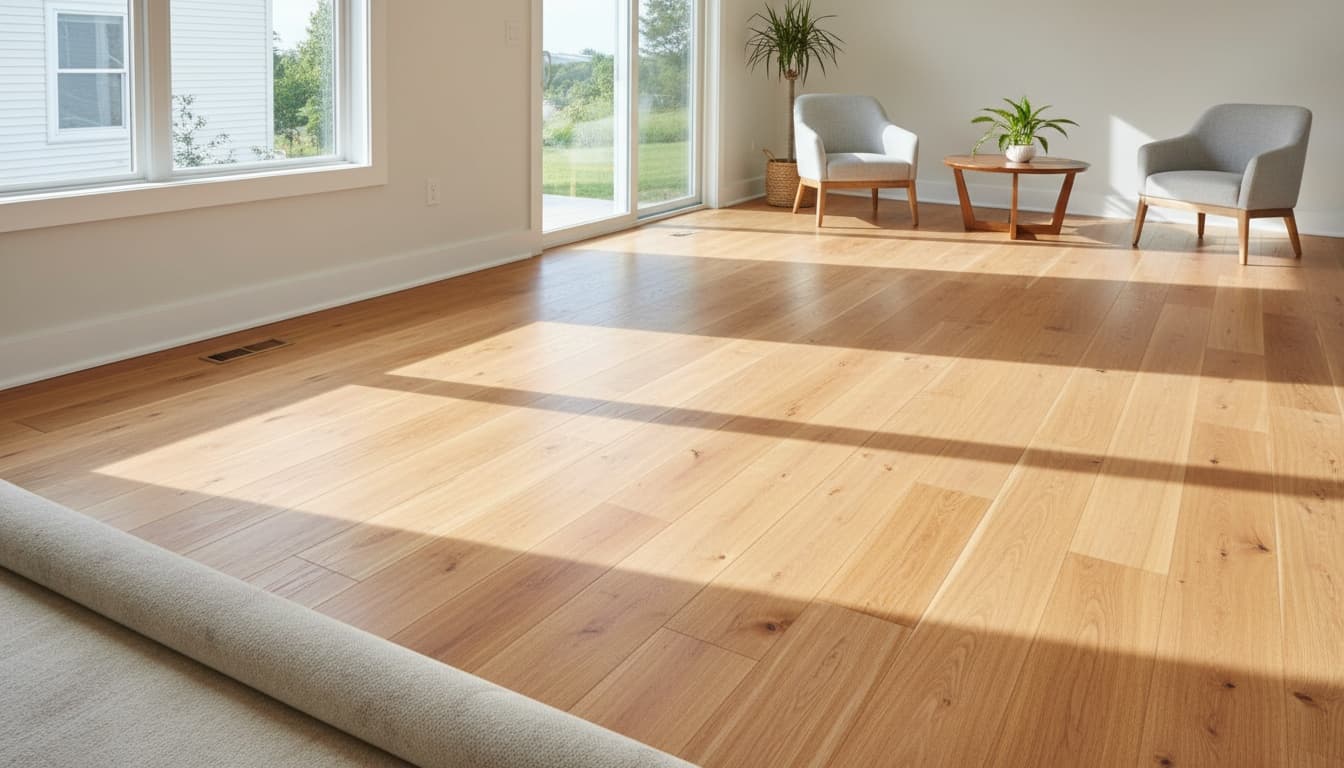
Material Cost per Square Foot (materials only)
Installation Labor Costs
Installation cost varies by material type and site complexity. Floating floors (LVP, laminate) are the cheapest and fastest to install. Nail-down hardwood and mortar-set tile require more skill and time. Stairs, patterns (herringbone, diagonal), and small rooms with many cuts increase labor costs per square foot.
Installation Labor per Square Foot
Want pricing specific to your zip code?
Our Fair Market Rate™ factors in local labor rates and material costs.
Existing Floor Removal
Unless you’re installing a floating floor over existing hard surfaces, the old flooring needs to be removed. Carpet removal is relatively quick and cheap. Tile removal is the most labor-intensive and expensive because it often damages the subfloor underneath, requiring additional repair before new flooring can be installed.
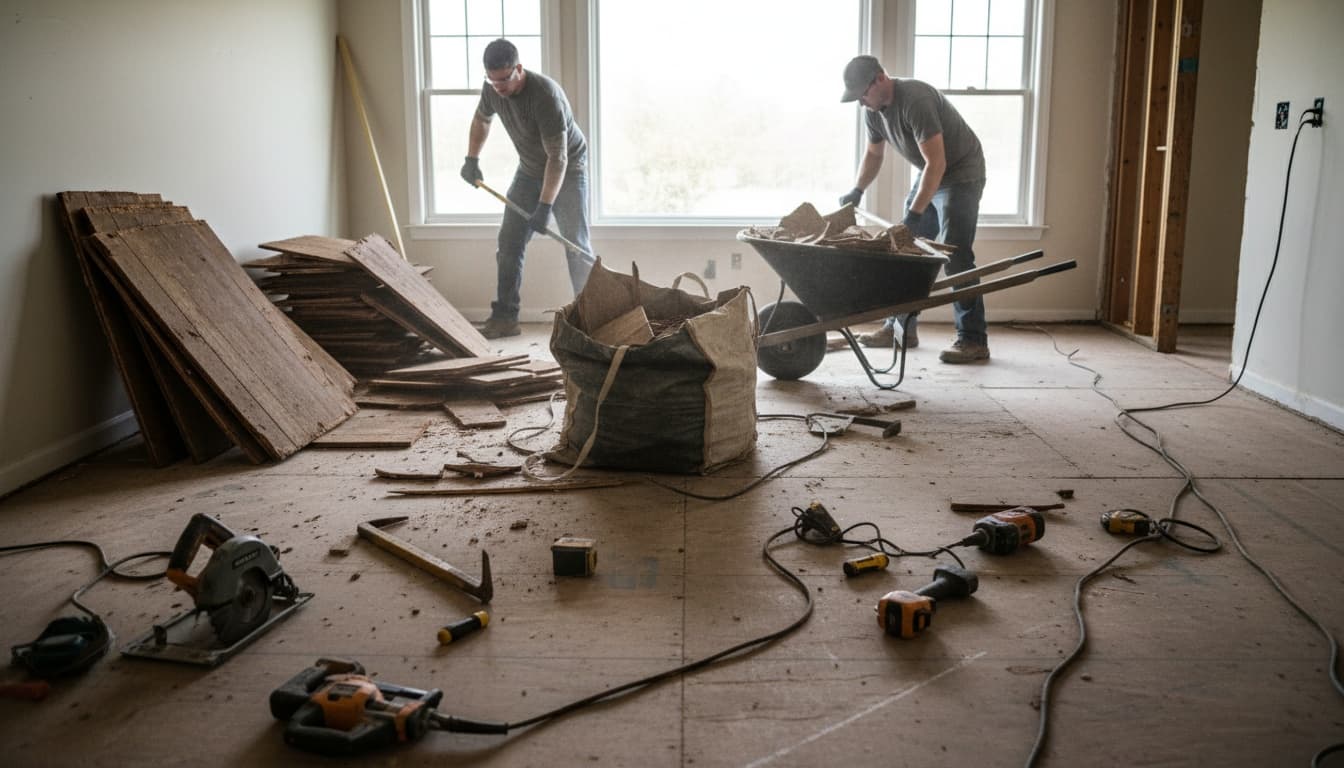
Removal & Prep Costs
Cost by Room
Flooring costs vary by room due to size differences, material suitability, and installation complexity. Bathrooms and kitchens require waterproof materials (tile, LVP, or vinyl) and may need moisture barriers. Living rooms and bedrooms offer the widest material choice. Basements require moisture-resistant materials and may need subfloor systems.
Typical Cost by Room (installed)
Labor Costs
$2 – $8 per sq ft
Labor accounts for 30–50% of a flooring project, depending on material. Floating floors (LVP, laminate) are the fastest and most affordable to install — a crew can cover 300–500 sq ft per day. Tile work is the slowest at 100–200 sq ft per day due to mortar setting time. Hardwood installation falls in between at 200–300 sq ft per day.
Enhancement & Improvement Costs
What Drives the Cost
- Existing flooring removal adds $1–$3/sq ft (tile removal is the most expensive)
- Subfloor condition — repairs or leveling can add $2–$5/sq ft
- Staircase flooring costs 50–100% more per step than flat floors
- Transition strips and baseboards add $200–$800 depending on room count
- Pattern installation (herringbone, diagonal) adds 15–25% to labor cost
- Moisture barriers for basements and concrete slabs add $0.50–$1.50/sq ft
Pro Tips
- LVP is waterproof, scratch-resistant, and installs over most existing floors
- Hardwood adds the most resale value — buyers pay a premium for real wood floors
- Buy 10% extra material to account for cuts, waste, and future repair needs
- Choose click-lock LVP over glue-down for easier DIY installation and future replacement
Flooring installation takes 1–3 days per room.
Frequently Asked Questions
What’s the best flooring for a kitchen?
LVP (luxury vinyl plank) is the top choice for kitchens — it’s 100% waterproof, scratch-resistant, comfortable underfoot, and available in realistic wood and stone looks. Tile is the traditional choice and extremely durable but harder and colder underfoot.
How long does flooring last?
Laminate: 10–20 years. LVP: 15–25 years. Carpet: 5–15 years. Tile: 50+ years. Hardwood: 50–100+ years (can be refinished multiple times). Material quality and maintenance affect actual lifespan significantly.
Can I install new flooring over old flooring?
In many cases, yes. Floating floors (LVP, laminate) can be installed over existing hard surfaces if they’re flat and in good condition. However, installing over carpet or damaged subfloors is not recommended.
What flooring adds the most home value?
Hardwood floors consistently add the most resale value. Real estate studies show homes with hardwood sell faster and for 3–5% more than comparable homes without. LVP is a strong second choice that buyers increasingly accept.
These are national averages. Get a price for your zip code.
Our Fair Market Rate™ factors in local labor rates, material suppliers, and market demand.
Flooring Cost by City
Local estimates adjusted for regional labor and material costs.
New York, NY
$4,500 – $16,900
Los Angeles, CA
$4,550 – $17,050
Chicago, IL
$4,150 – $15,550
Dallas, TX
$4,125 – $15,475
Houston, TX
$3,950 – $14,800
Atlanta, GA
$4,000 – $15,025
Washington, DC
$4,650 – $17,475
Philadelphia, PA
$4,150 – $15,525
Miami, FL
$4,575 – $17,125
Phoenix, AZ
$4,050 – $15,225
Boston, MA
$4,375 – $16,450
Riverside, CA
$4,200 – $15,725
Flooring Cost by State
More Cost Guides
Decks & Patios
$7,000 – $25,000
Interior Painting
$3,000 – $8,000
Exterior Painting
$5,000 – $15,000
Kitchen Remodeling
$15,000 – $50,000
Bathroom Remodeling
$10,000 – $30,000
Cabinet Painting
$1,200 – $7,000
Hiring an Electrician
$160 – $520
Electrical Panel Upgrade
$1,300 – $4,000
Electrical Outlet Installation
$120 – $300