2026 Cost Guide
How Much Does Generator Installation Cost in 2026?
Quick Answer: The average cost of generator installation in 2026 is $7,500. Typical range: $3,000 – $15,000 ($3,000 – $15,000 per unit installed).
Source: ClearCost Fair Market Rate data — updated April 2026
National Average
$7,500
Typical range: $3,000 – $15,000
$3,000 – $15,000 per unit installed
Cost at a Glance
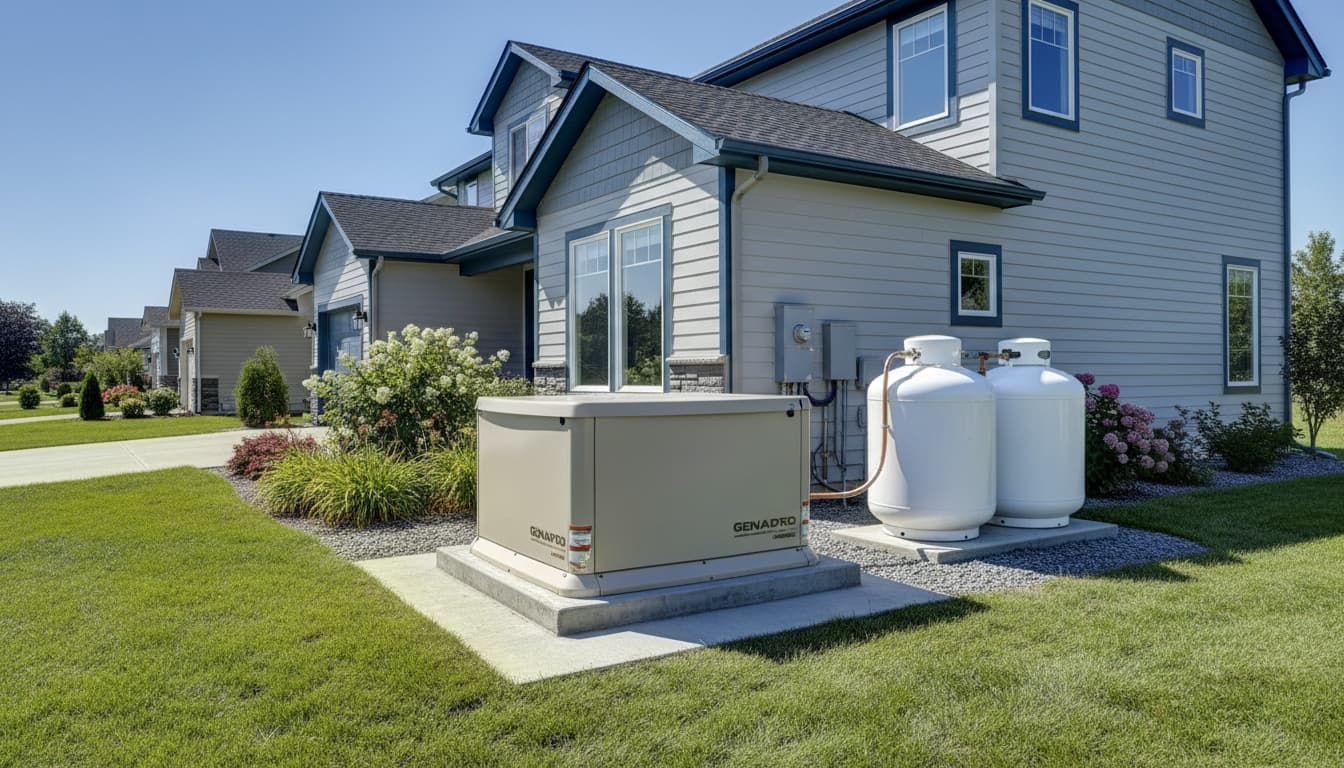
A whole-house standby generator provides automatic backup power during outages, protecting your home from food spoilage, frozen pipes, sump pump failure, and loss of HVAC. Portable generators are far cheaper but require manual setup and cannot power an entire home. The national average for a fully installed standby generator is $7,500, with costs ranging from $3,000 for a basic portable setup with a transfer switch to $15,000 or more for a large whole-house unit.
Standby Generator Cost by Size
Standby generators are permanently installed outside your home and run on natural gas or propane. They start automatically within seconds of a power outage and can run indefinitely as long as fuel is available. Generator size is measured in kilowatts (kW), and the right size depends on which circuits and appliances you want to power. A 10–14 kW unit covers essential circuits (lights, refrigerator, sump pump, a few outlets), while a 20–26 kW unit can power an entire mid-size home including the HVAC system.
Standby Generator Cost by Size (installed)
Portable Generator Options
Portable generators are a budget-friendly alternative for homeowners who experience infrequent, short outages. They run on gasoline and must be started manually, placed outdoors, and connected to the home through extension cords or a manual transfer switch. A manual transfer switch allows a portable generator to safely power selected circuits in your electrical panel. While portable generators cannot match the convenience or capacity of standby units, they provide essential backup power at a fraction of the cost.
Portable Generator Costs
Local pricing for generator installation is coming soon
We're building a Fair Market Rate™ calculator for this project type. Get notified when it launches.
Transfer Switch & Electrical Work
The transfer switch is a critical safety component that prevents back-feeding electricity into utility lines, which can electrocute line workers. Standby generators require an automatic transfer switch (ATS) that detects power loss and switches to generator power within seconds. Portable generators use a less expensive manual transfer switch. If your electrical panel needs an upgrade to accommodate the transfer switch and generator circuits, that cost is additional. Most installations also require running heavy-gauge wire from the transfer switch to the generator pad.
Transfer Switch & Electrical Costs
Fuel Connection & Site Preparation
Standby generators need a permanent fuel supply — either a natural gas line from the utility or a propane tank. If natural gas is available at your home, running a new gas line to the generator pad typically costs $500–$2,000. If you use propane, you will need a dedicated tank (250–500 gallons for most residential generators) and a fuel line. The generator must be placed on a concrete or gravel pad that meets the manufacturer's clearance requirements from the home, windows, and property lines.
Fuel & Site Prep Costs
Labor Costs
$1,500 – $3,500
Generator installation labor includes setting the unit on its pad, running electrical connections to the transfer switch and panel, connecting the fuel supply, programming the automatic transfer switch, and performing a full load test. A typical standby generator installation takes 1–2 days for a crew of 2 electricians, plus a plumber or gas fitter for the fuel line. Some manufacturers require installation by a certified dealer to maintain the warranty.
Enhancement & Improvement Costs
What Drives the Cost
- Generator size (kW) — larger units that power the whole home cost significantly more
- Fuel type — natural gas line extension adds $500–$2,000; propane tanks add $1,000–$2,500
- Transfer switch type — automatic ($800–$2,000) vs. manual ($500–$1,200)
- Electrical panel capacity — a panel upgrade may be needed, adding $1,500–$3,500
- Site preparation — concrete pads, setback requirements, and landscaping screening add cost
- Brand — premium brands (Generac, Kohler, Briggs) vary by $1,000–$3,000 for similar kW ratings
Pro Tips
- Size your generator to match your actual electrical needs — oversizing wastes money on fuel and equipment
- Natural gas generators eliminate fuel storage and delivery concerns if gas service is available
- Sign up for a maintenance plan — generators need annual oil changes, filter replacements, and load testing
- Install a Wi-Fi monitoring module to check generator status and receive alerts from your phone
A standby generator installation typically takes 1–2 days once the equipment and permits are ready.
Frequently Asked Questions
How long can a standby generator run continuously?
Natural gas generators can run indefinitely since the fuel supply is unlimited. Propane generators are limited by tank size — a 500-gallon tank powers a 20 kW generator for approximately 5–7 days at 50% load. Manufacturers recommend running the generator under load for no more than 2 weeks continuously before maintenance.
How loud is a standby generator?
Modern standby generators produce 60–70 decibels at 23 feet, roughly equivalent to a normal conversation or a central air conditioner. Newer models with sound-attenuating enclosures can be as quiet as 58 dB. Most municipal noise ordinances allow generators during power outages.
Do I need a permit for generator installation?
Yes. Generator installations require both an electrical permit (for the transfer switch and wiring) and often a building or mechanical permit (for the gas line and pad placement). Your installer should handle all permitting as part of the project.
Natural gas vs. propane — which is better?
Natural gas is more convenient and cost-effective if a gas line is already at your home — no fuel delivery or tank refilling. Propane is the better option for rural areas without natural gas service. Propane also provides slightly more power per unit of fuel than natural gas.
Local pricing coming soon
We're adding Fair Market Rate™ estimates for generator installation. Enter your email to be the first to know.
Generator Installation Cost by City
Local estimates adjusted for regional labor and material costs.
New York, NY
$3,375 – $16,900
Los Angeles, CA
$3,400 – $17,050
Chicago, IL
$3,100 – $15,550
Dallas, TX
$3,100 – $15,475
Houston, TX
$2,950 – $14,800
Atlanta, GA
$3,000 – $15,025
Washington, DC
$3,500 – $17,475
Philadelphia, PA
$3,100 – $15,525
Miami, FL
$3,425 – $17,125
Phoenix, AZ
$3,050 – $15,225
Boston, MA
$3,300 – $16,450
Riverside, CA
$3,150 – $15,725