2026 Cost Guide
How Much Does Stamped Concrete Cost in 2026?
Quick Answer: The average cost of stamped concrete installation in 2026 is $4,500. Typical range: $2,000 – $8,000 ($10 – $20 per sq ft).
Source: ClearCost Fair Market Rate data — updated April 2026
Cost at a Glance
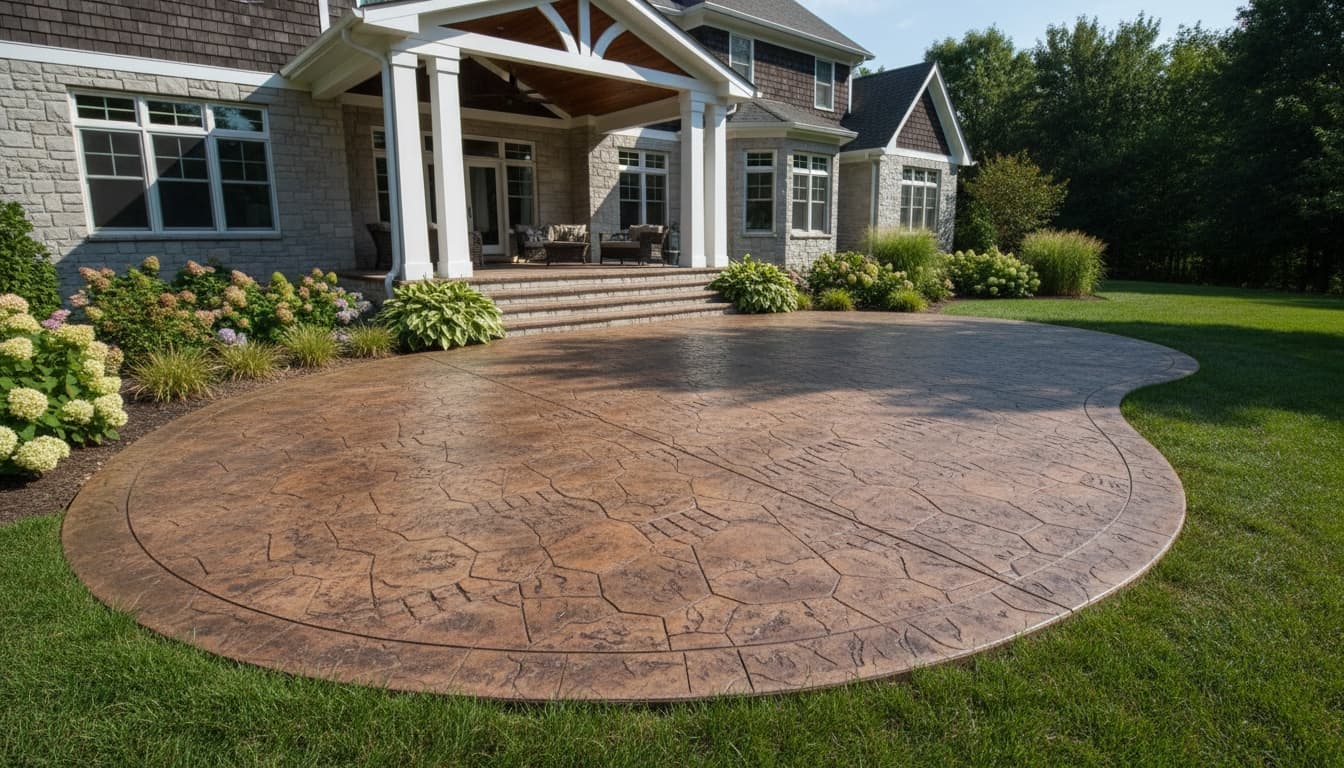
Stamped concrete replicates the look of natural stone, brick, slate, or wood at a fraction of the cost of those materials. The national average cost is about $4,500 for a standard 300-square-foot project, with most homeowners spending between $2,000 and $8,000. Stamped concrete is popular for patios, pool decks, walkways, and driveways because it delivers high-end aesthetics with the durability of concrete. Color, pattern complexity, and project size are the main cost drivers.
Stamped Concrete Cost by Pattern
The stamp pattern determines how closely the finished surface resembles natural materials. Simple patterns like ashlar slate and brick running bond use a single repeating stamp and one color, making them the most affordable. Mid-range patterns like random stone and cobblestone incorporate irregular shapes and two-tone coloring for a more natural look. Premium patterns like European fan, wood plank, and custom multi-pattern layouts require precise placement, multiple stamp sets, and hand-detailing that increase labor time and cost.
Cost per Square Foot by Pattern Complexity
Stamped Concrete Cost by Project Type
Stamped concrete is versatile enough for nearly any outdoor surface. Patios are the most common application, followed by pool decks, walkways, and driveways. Driveways require thicker concrete (5–6 inches vs. 4 inches for patios) and a stronger base to support vehicle weight, which increases the cost per square foot. Pool decks need a slip-resistant texture and special attention to drainage slopes. Walkways are narrower and typically use simpler patterns, keeping costs on the lower end.
Total Cost by Project Type (300 sq ft)
Want pricing specific to your zip code?
Our Fair Market Rate™ factors in local labor rates and material costs.
Coloring, Sealing & Maintenance
Color is applied to stamped concrete in two ways: integral color is mixed into the concrete before pouring and provides consistent color throughout the slab, while color hardener is broadcast onto the surface during stamping and produces richer, more durable color on the surface. A release agent is applied before stamping to prevent the stamps from sticking and adds a subtle secondary color tone. After curing, the surface must be sealed with a high-quality acrylic or polyurethane sealer to protect the color and pattern. Resealing every 2–3 years maintains the appearance and longevity.
Coloring & Sealing Costs
Labor Costs
$5 – $12 per sq ft
Stamped concrete installation is more labor-intensive than standard concrete work because the stamping must be done while the concrete is still plastic — creating a tight time window. A crew of 3–5 experienced workers handles pouring, color application, stamping, and detailing simultaneously. The stamping process requires speed, precision, and coordination; mistakes are difficult to fix once the concrete sets. Labor represents approximately 50–60% of the total project cost. Experienced stamped-concrete contractors command higher rates but deliver significantly better results.
Enhancement & Improvement Costs
What Drives the Cost
- Pattern complexity — basic single-stamp patterns cost far less than multi-pattern custom layouts
- Project size — larger areas lower the per-square-foot cost due to economies of scale
- Number of colors — two-tone and hand-stained finishes increase labor and material costs
- Application type — driveways require thicker slabs and stronger bases than patios
- Sealer type — high-gloss sealers cost more but provide better color enhancement and protection
Pro Tips
- Hire a contractor with a portfolio of stamped concrete work — skill level varies widely in this specialty
- Request a sample board with your chosen pattern and color before committing
- Include control joints in the design to manage cracking in visually acceptable locations
- Budget for resealing every 2–3 years to maintain color vibrancy and surface protection
- Avoid pouring stamped concrete in extreme heat — rapid drying reduces the time window for stamping
Stamped concrete takes 1–3 days to pour and stamp, plus 3–5 days of curing before foot traffic and sealing.
Frequently Asked Questions
How long does stamped concrete last?
Stamped concrete lasts 25–50 years when properly installed and maintained. The concrete itself is as durable as any standard slab. The decorative surface can show wear over time, particularly in high-traffic areas, but regular resealing every 2–3 years preserves the color and pattern. Cracks can occur just as with any concrete, so proper base preparation and control joints are essential.
Is stamped concrete slippery when wet?
Stamped concrete with a sealed, smooth surface can be slippery when wet, especially on pool decks and sloped walkways. Anti-slip additives can be mixed into the sealer at minimal extra cost to provide better traction. Choosing a textured stamp pattern (like rough-cut stone) also improves grip compared to smooth patterns.
Stamped concrete vs. pavers — which is better?
Stamped concrete costs 25–40% less than pavers and is poured as a single monolithic slab, which means no weed growth between joints. However, if a section cracks, it cannot be replaced as easily as individual pavers. Pavers offer easier repairs and slightly more design flexibility. Stamped concrete is ideal when you want the look of stone or brick at a lower price with a seamless surface.
These are national averages. Get a price for your zip code.
Our Fair Market Rate™ factors in local labor rates, material suppliers, and market demand.
Stamped Concrete Installation Cost by City
Local estimates adjusted for regional labor and material costs.
New York, NY
$2,250 – $9,000
Los Angeles, CA
$2,275 – $9,100
Chicago, IL
$2,075 – $8,300
Dallas, TX
$2,050 – $8,250
Houston, TX
$1,975 – $7,900
Atlanta, GA
$2,000 – $8,000
Washington, DC
$2,325 – $9,325
Philadelphia, PA
$2,075 – $8,275
Miami, FL
$2,275 – $9,125
Phoenix, AZ
$2,025 – $8,125
Boston, MA
$2,200 – $8,775
Riverside, CA
$2,100 – $8,375