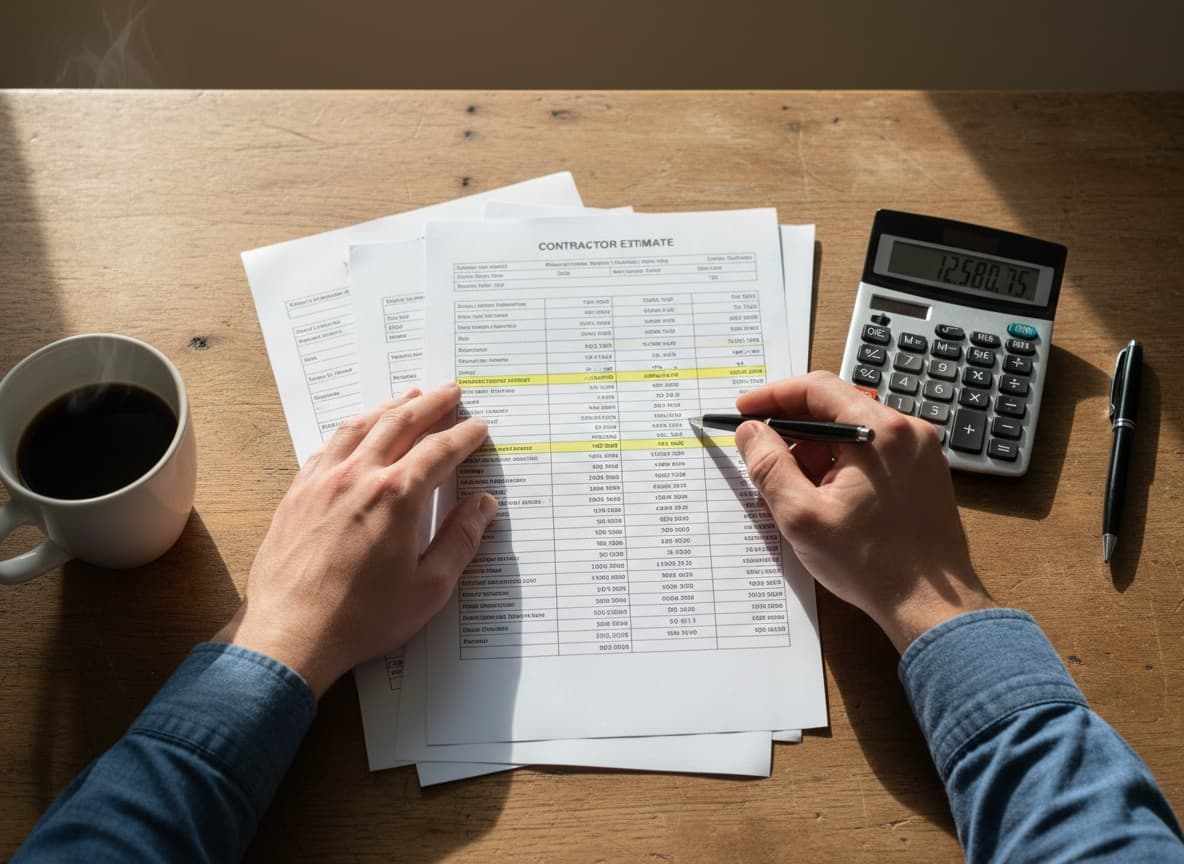
Every major lead-generation platform — Angi, Thumbtack, HomeAdvisor — operates on the same model: homeowners request "free estimates" and contractors pay $25–$150 per lead for the privilege of competing for your job. That cost gets baked into every quote you receive.

The Hidden Lead Tax
A typical contractor on these platforms spends $500–$2,000/month on leads. Their close rate? Usually 15–25%. That means for every job they win, they've paid for 4–7 leads that went nowhere. All of that cost gets absorbed into their pricing.
Let's do the math: If a contractor pays $75 per lead and wins 1 out of 5 leads, the cost-per-acquisition is $375. That $375 gets added to your quote — whether you realize it or not. For larger projects where leads cost $100–$150, the acquisition cost can exceed $750 per won job.
This isn't the contractor being greedy — it's the economics of the platform model. They have to recoup their marketing spend somewhere, and that somewhere is your project price.
The Bidding War Problem
When 3–5 contractors compete for the same job, they're not just competing on price — they're competing on who can present the best pitch during a 30-minute site visit. This incentivizes salesmanship over craftsmanship, and often leads to lowball bids that balloon with change orders once the contract is signed.
The lowball trap works like this:
- Contractor submits the lowest bid to win the job, knowing it's below actual cost
- Once work begins, "unexpected" issues arise that require change orders
- Homeowner is already invested (demo is done, kitchen is torn apart) and has no leverage to negotiate
- Final cost ends up 20–40% above the original "winning" bid — often more than the honest bids that were rejected
We call this the "low bid, high change order" playbook, and it's the single most common pattern in contractor disputes.
The Time Tax
Beyond the financial cost, the traditional estimate process steals your time:
- Scheduling: 2–4 hours coordinating schedules with 3–5 contractors
- Site visits: 3–5 hours hosting and explaining your project (often during work hours)
- Follow-up: 2–3 hours chasing quotes that were "promised by Friday"
- Comparison: 1–2 hours trying to compare quotes that aren't apples-to-apples
That's 8–14 hours of your life spent on a process that often produces worse outcomes than a data-driven approach.
A Better Model
What if you knew the fair price before talking to a single contractor? What if the contractor you matched with didn't have to spend hundreds on lead generation — and could pass those savings to you? That's the model ClearCost was built on.
When a contractor doesn't have to compete against 4 others for every job, they can price honestly from day one. No lowball trap. No inflated quotes to cover lead costs. Just a fair price for good work.