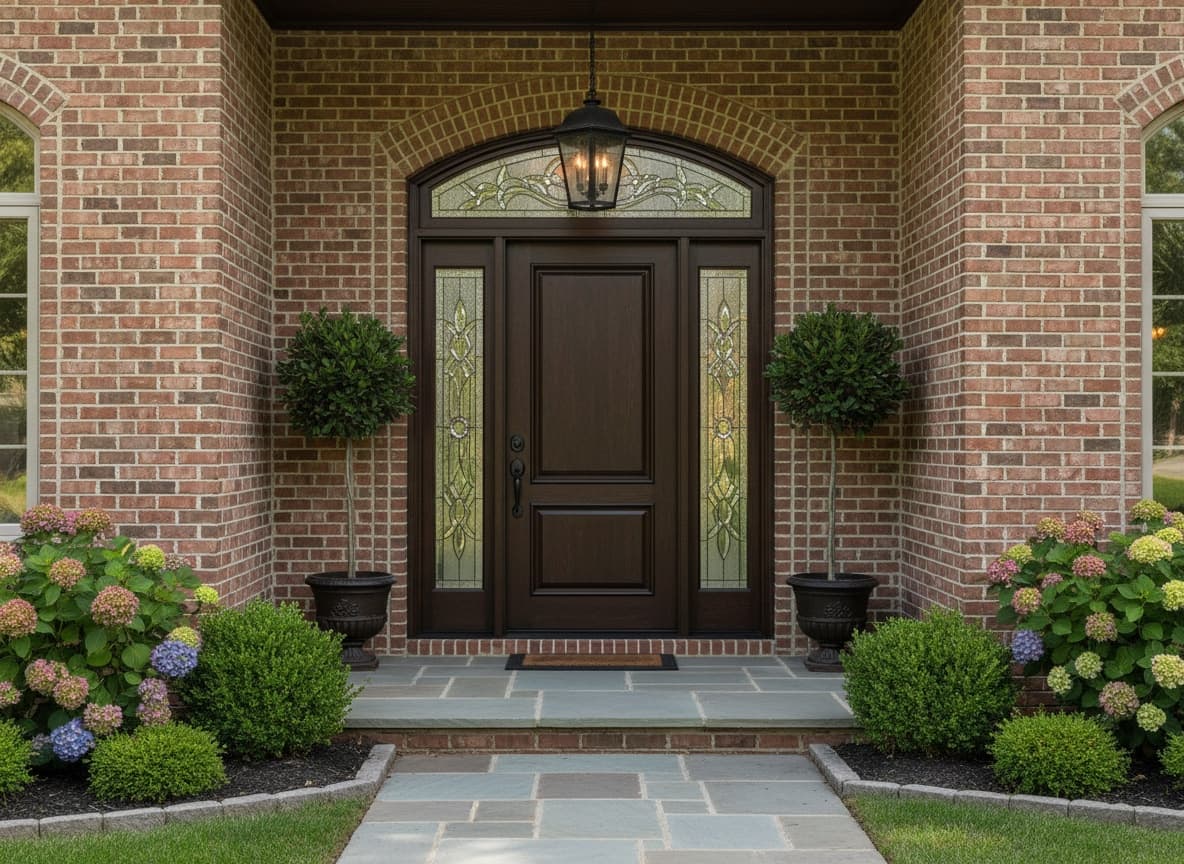
Replacing your front door is one of the highest-ROI home improvements you can make — Remodeling Magazine's Cost vs. Value report consistently shows 90%+ recoup rates. But the material choice matters more than most homeowners realize.
Steel: The Security Champion
Steel entry doors ($150–$700 for the door itself) are the most affordable option and provide excellent security. A 20-gauge steel door is extremely difficult to kick in. The downside: steel dents, rusts in coastal environments, and conducts heat — making it a poor insulator without a foam core.
Gauge matters: Steel doors are rated by gauge — lower numbers mean thicker steel. A 24-gauge door is entry-level. A 20-gauge door is premium and what we recommend as a minimum. Most break-ins occur through the door frame, not the door itself, so pair any steel door with a reinforced strike plate and 3" screws into the framing.
The rust factor: If you live within 5 miles of salt water, steel doors will rust — even with factory primer. In coastal environments, fiberglass is the only material that makes long-term sense.
Fiberglass: The All-Rounder
Fiberglass doors ($300–$2,000+) won't dent, rust, or warp. High-end models from Therma-Tru or Plastpro feature realistic woodgrain textures that are indistinguishable from real wood. With a polyurethane foam core, fiberglass doors provide 5x better insulation than steel.
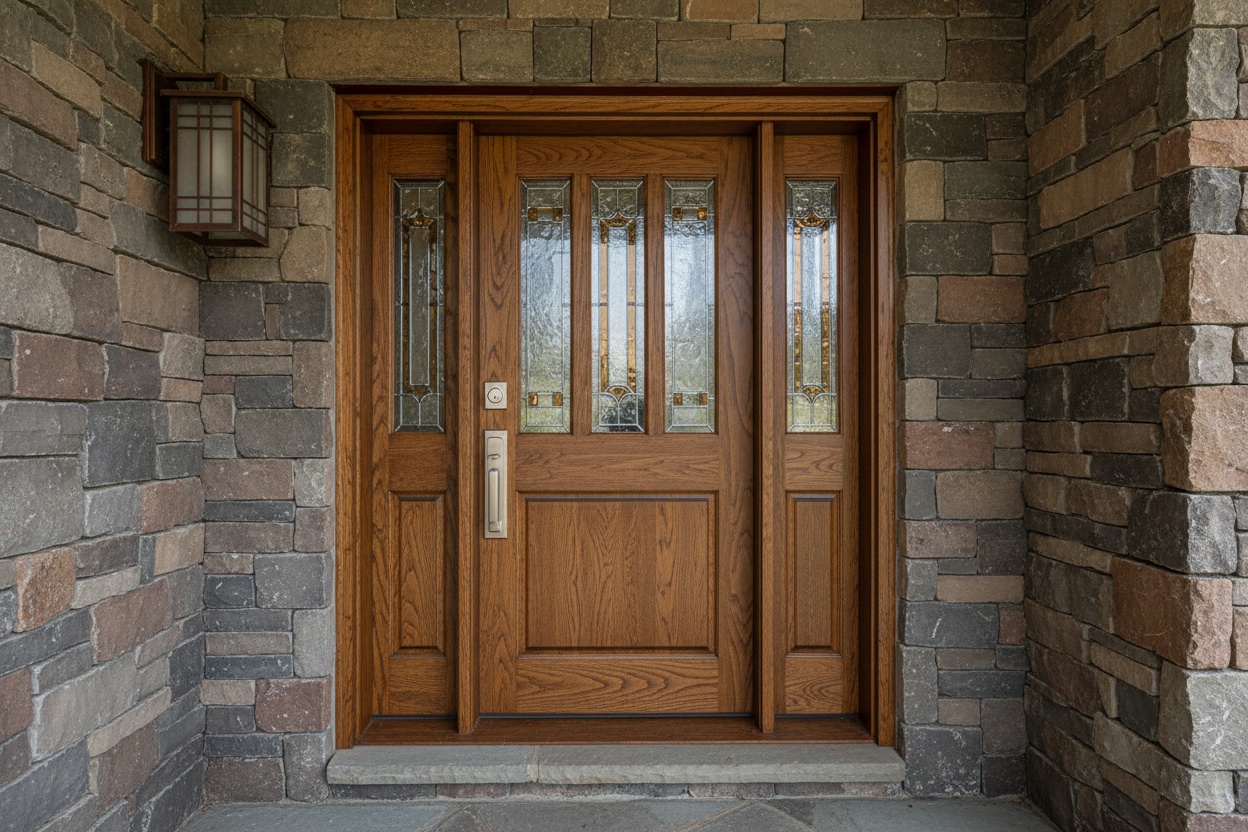
The best feature most people miss: Fiberglass doors can be stained to look like real wood. A quality gel stain on a woodgrain fiberglass door is virtually indistinguishable from a $3,000 solid mahogany door — at a fraction of the cost and with zero maintenance.
What about wood doors? Solid wood entry doors ($1,000–$5,000+) are beautiful but require regular refinishing, swell in humidity, and provide less insulation than fiberglass. We only recommend them for covered entries with minimal weather exposure, or for homeowners who genuinely enjoy the maintenance ritual.
Head-to-Head Comparison
| Feature | Steel | Fiberglass |
|---|---|---|
| Price (door only) | $150–$700 | $300–$2,000+ |
| Security | Excellent | Very Good |
| Insulation (R-value) | R-6 to R-8 | R-12 to R-16 |
| Dent resistance | Poor | Excellent |
| Rust resistance | Fair | Excellent |
| Lifespan | 15–20 years | 30+ years |
The ROI Verdict
A midrange steel door replacement recoups 188% of its cost at resale — the highest ROI of any home improvement project. Fiberglass doors recoup about 80%, but their longevity (30+ years vs. 15–20 for steel) often makes them the better long-term investment.
Installation Costs to Know
The door itself is only part of the cost. Professional installation adds $300–$800 depending on complexity. If you're changing the door size (wider, taller), adding sidelights, or replacing the frame, expect $1,500–$3,500 for the complete job including carpentry, weatherstripping, and hardware.
Don't DIY this one. A poorly installed entry door creates air leaks, water infiltration, and security vulnerabilities. The install precision required for proper weathersealing is worth the labor cost.