Bathroom remodels are notorious for going over budget. The national average sits at $10,000–$30,000, but the actual number depends heavily on what's hiding behind your walls. We've managed hundreds of bathroom renovations, and the pattern is predictable: the initial quote covers the visible work, but the real costs hide behind tile and drywall.
1. Water Damage Behind Walls ($1,000–$3,000)
Once demo starts and the old tile comes down, there's a 30–40% chance of discovering water damage, mold, or rotted studs. Remediation adds $1,000–$3,000 to the project. No contractor can predict this until demolition begins.
What to watch for: Spongy floor near the toilet base, discolored baseboards, musty smell, or any sign of previous amateur repairs. If your bathroom hasn't been remodeled in 20+ years, budget an extra 15% for what's behind the walls.
Mold remediation specifically can escalate quickly. Surface mold on drywall is a $500–$1,000 fix. But if mold has penetrated the studs or subfloor, professional remediation with containment and air scrubbing can run $2,000–$5,000. If mold is discovered, your contractor should stop work and bring in a certified mold specialist — not attempt to handle it themselves.
2. Plumbing Rough-In Changes ($1,500–$3,000)
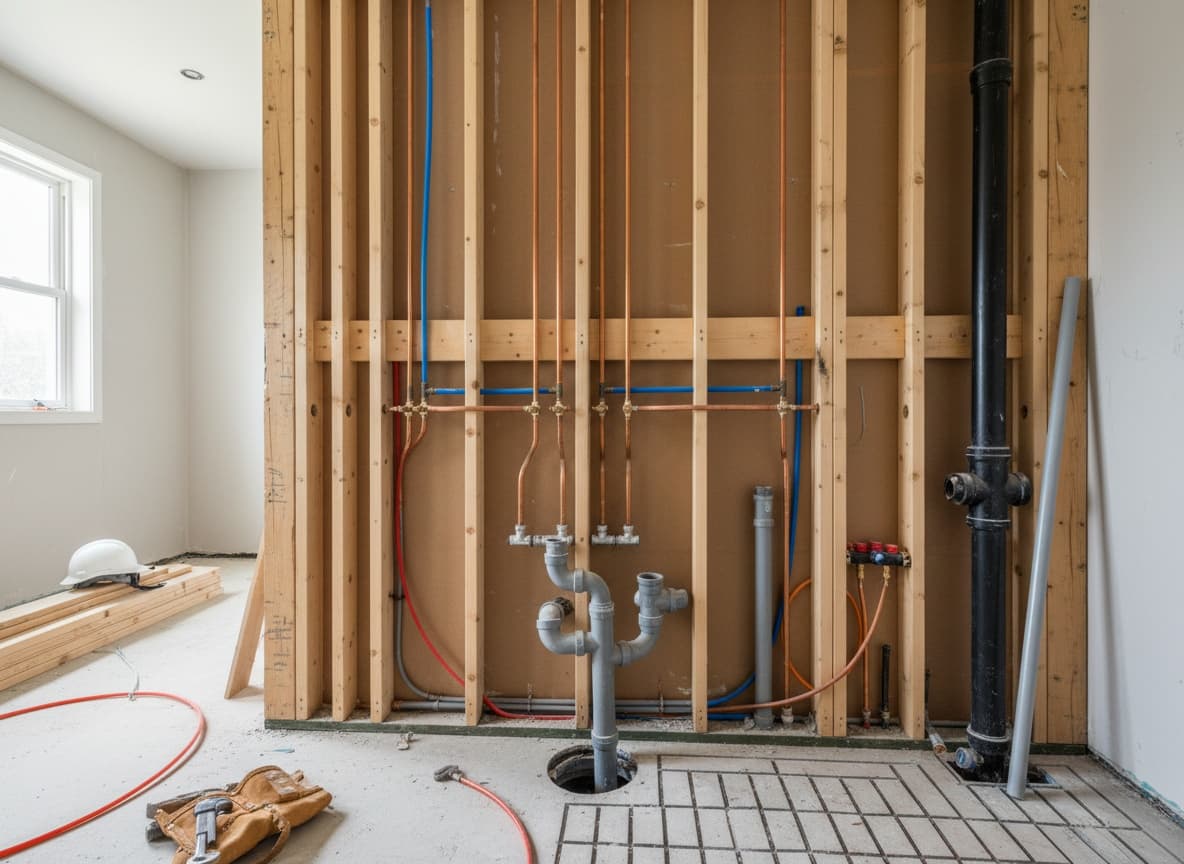
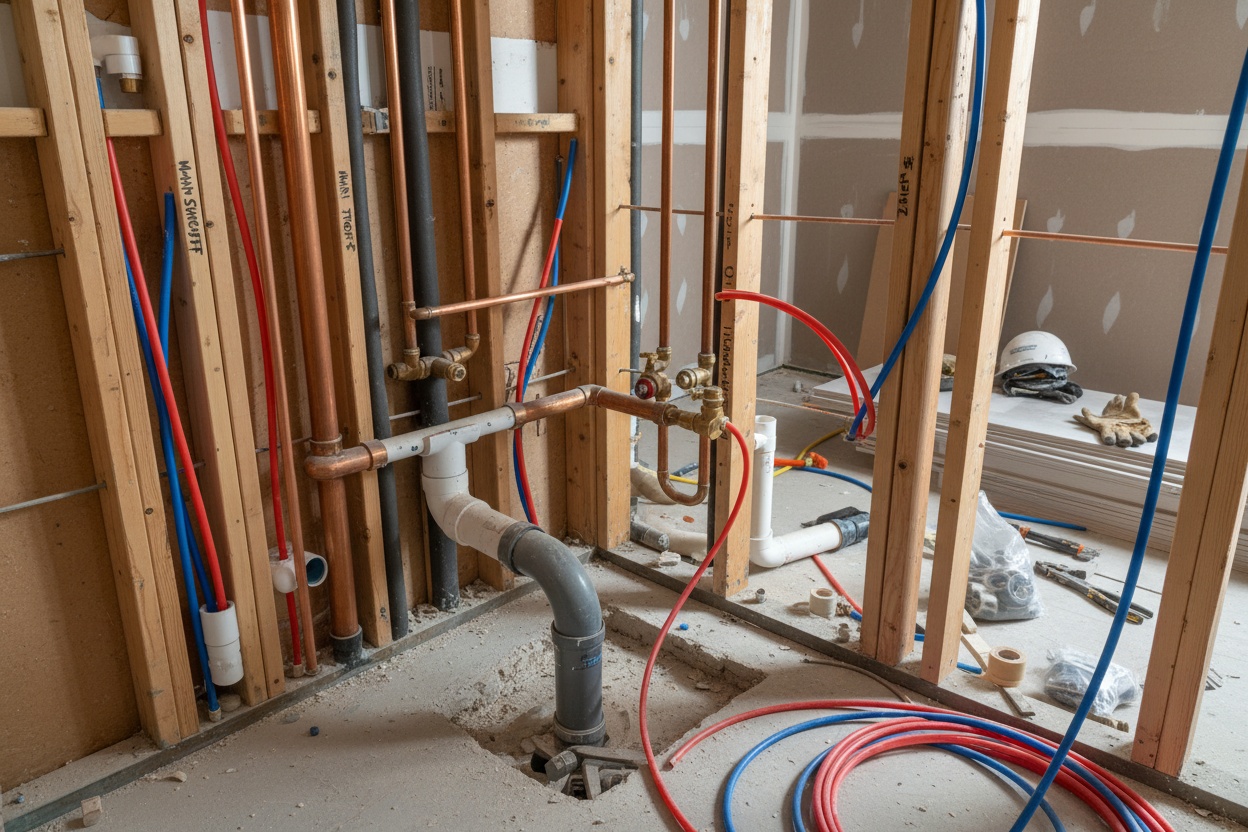
Moving a toilet even 12 inches requires cutting the concrete slab and re-routing the waste line. That's a $1,500–$3,000 change order before you've chosen a single tile.
The same applies to moving the shower drain. If you're switching from a tub to a walk-in shower, the drain position almost always needs to change — and that means opening the floor. In homes with slab foundations, this involves cutting concrete, which adds both cost and time.
3. Electrical Upgrades ($500–$1,200)
Older homes often have bathrooms on 15-amp circuits with no GFCI protection. Code requires dedicated 20-amp GFCI circuits for bathrooms. Upgrading: $500–$1,200.
Common electrical surprises:
- No dedicated circuit for the bathroom (shared with a bedroom or hallway)
- Aluminum wiring in pre-1975 homes requiring special connectors or replacement
- Insufficient outlets — current code requires a GFCI outlet within 36" of each sink
- Heated floor installation requiring a dedicated circuit ($200–$400 for the electrical alone, separate from the heating system cost)
4. Waterproofing (Done Right) ($800–$1,500)
A proper shower pan with Kerdi membrane or hot-mop waterproofing costs $800–$1,500 in labor. Cheap contractors skip this step — and you pay for it when the shower leaks into the floor below three years later.
The industry standard: Every shower enclosure should have a waterproof membrane system — either Schluter Kerdi, Laticrete Hydro Ban, or a traditional hot-mop liner. The membrane creates a continuous waterproof barrier behind the tile. Without it, water eventually wicks through the grout, saturates the backer board, and rots the framing.
Ask your contractor specifically: "What waterproofing system are you using in the shower?" If the answer is "just cement board" or "RedGard on the backer," push back. Cement board alone is not waterproof, and paint-on membranes must be applied at the correct thickness (many contractors rush this step).
5. Ventilation Fan Upgrade ($300–$800)
Code requires proper bathroom exhaust venting to the exterior. If your current fan vents into the attic (very common in pre-2000 homes), re-routing the vent adds $300–$800.
Why this matters beyond code: A bathroom without proper ventilation develops mold on the ceiling within 1–2 years. The moisture from daily showers has to go somewhere — and if it's going into your attic, you're creating a mold problem you'll discover during your next home sale inspection.
Fan sizing rule: Your exhaust fan should move at least 1 CFM per square foot of bathroom area, with a minimum of 50 CFM. For a 100 sq ft master bath, you want a 100+ CFM fan. Panasonic WhisperCeiling and Broan-NuTone are the brands we install most — both offer ultra-quiet models at 0.3 sone or less.
How to Protect Your Budget
The best defense against hidden costs is a realistic contingency fund. We recommend adding 15–20% on top of your contractor's quote to cover unknowns. If you don't use it, great — that's money back in your pocket. If you do, you won't be scrambling to find funds mid-project.