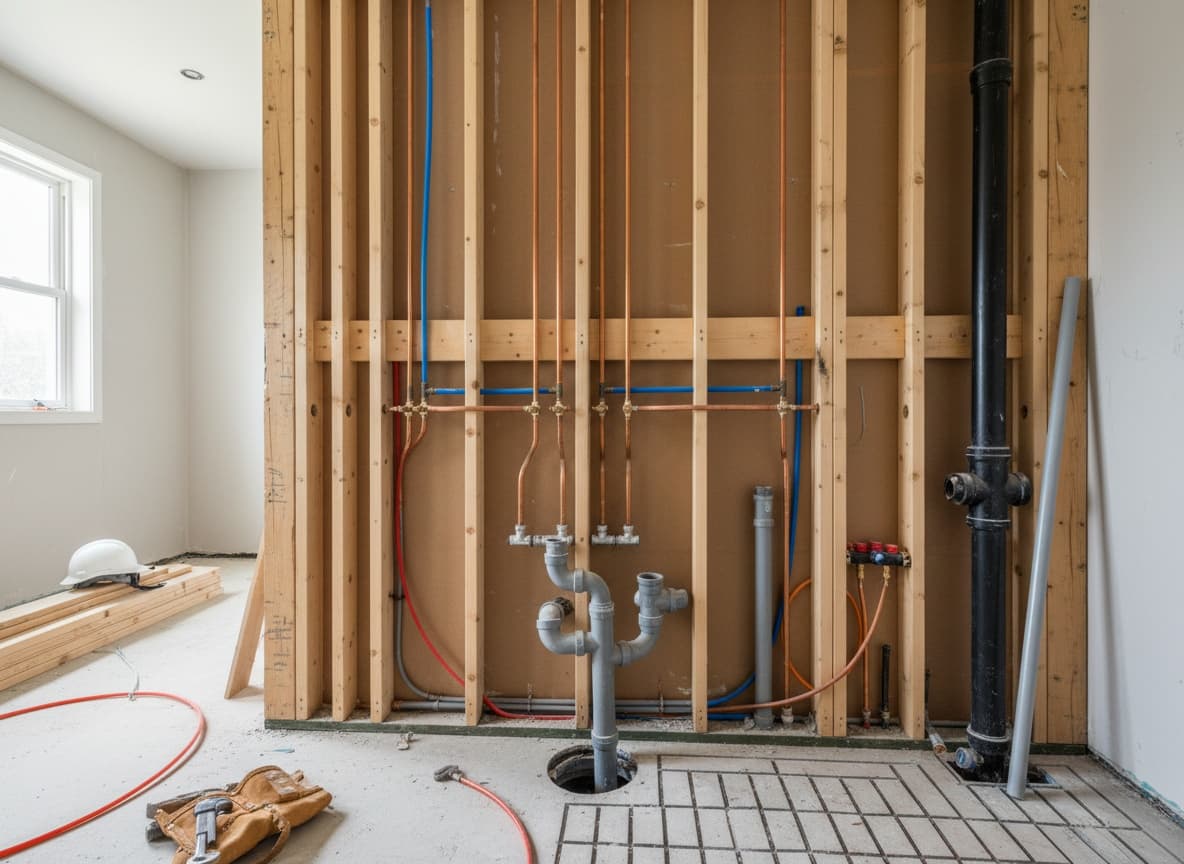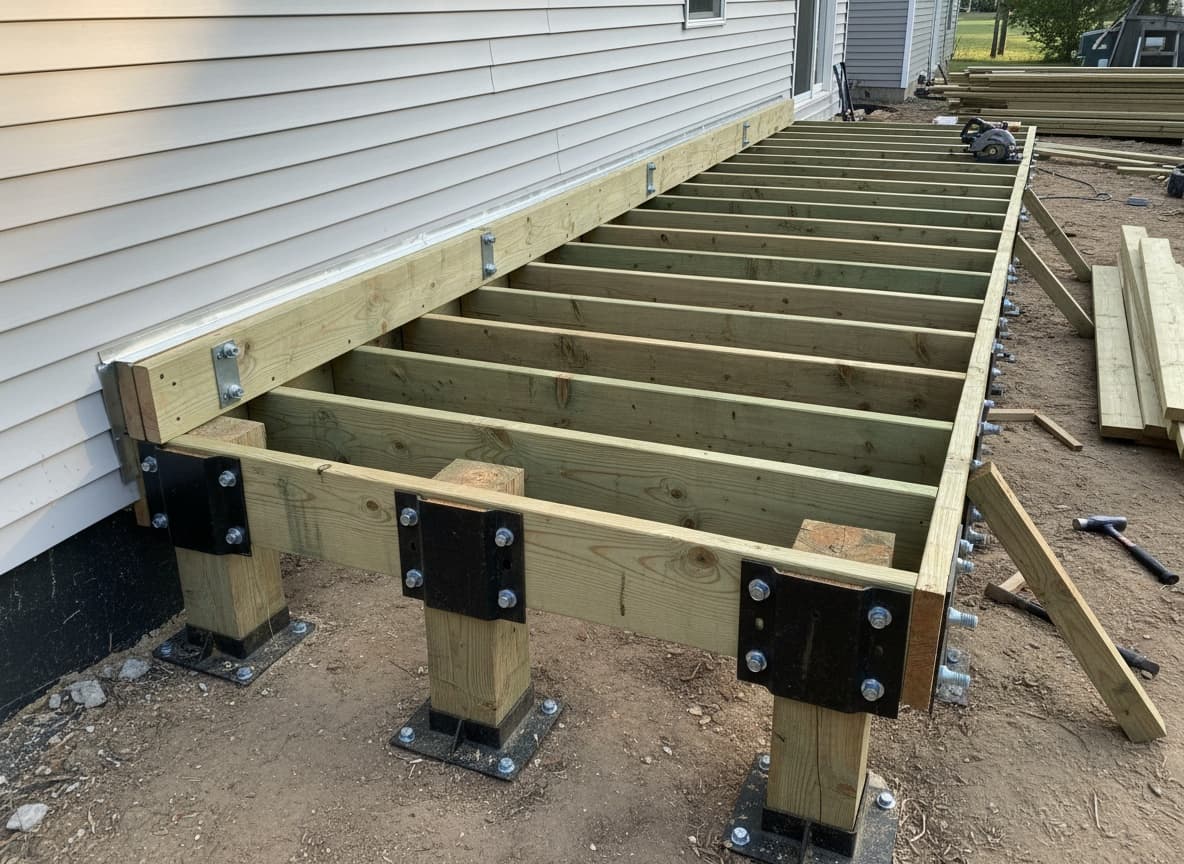
We call it the "rot tax" — the extra cost that shows up when we tear off an old deck and discover the ledger board, rim joist, or substructure has been silently rotting for years. It's one of the most common budget-busting surprises in residential construction, and it catches homeowners off guard every single time.
What We Find (And How Often)
On roughly 40% of deck tear-offs, we discover some level of structural damage. The most common culprits:
Rotted ledger board: The board that attaches your deck to the house is ground zero for water infiltration. Replacing it and installing proper flashing: $800–$2,000. This is by far the most common issue — and the most dangerous. A failing ledger board is the #1 cause of deck collapses.
Damaged rim joist: If the ledger has been leaking, the house's rim joist behind it is likely compromised. Sistering or replacing it: $1,000–$3,000. In severe cases, we've discovered rim joist damage so extensive that a structural engineer had to design a repair plan.
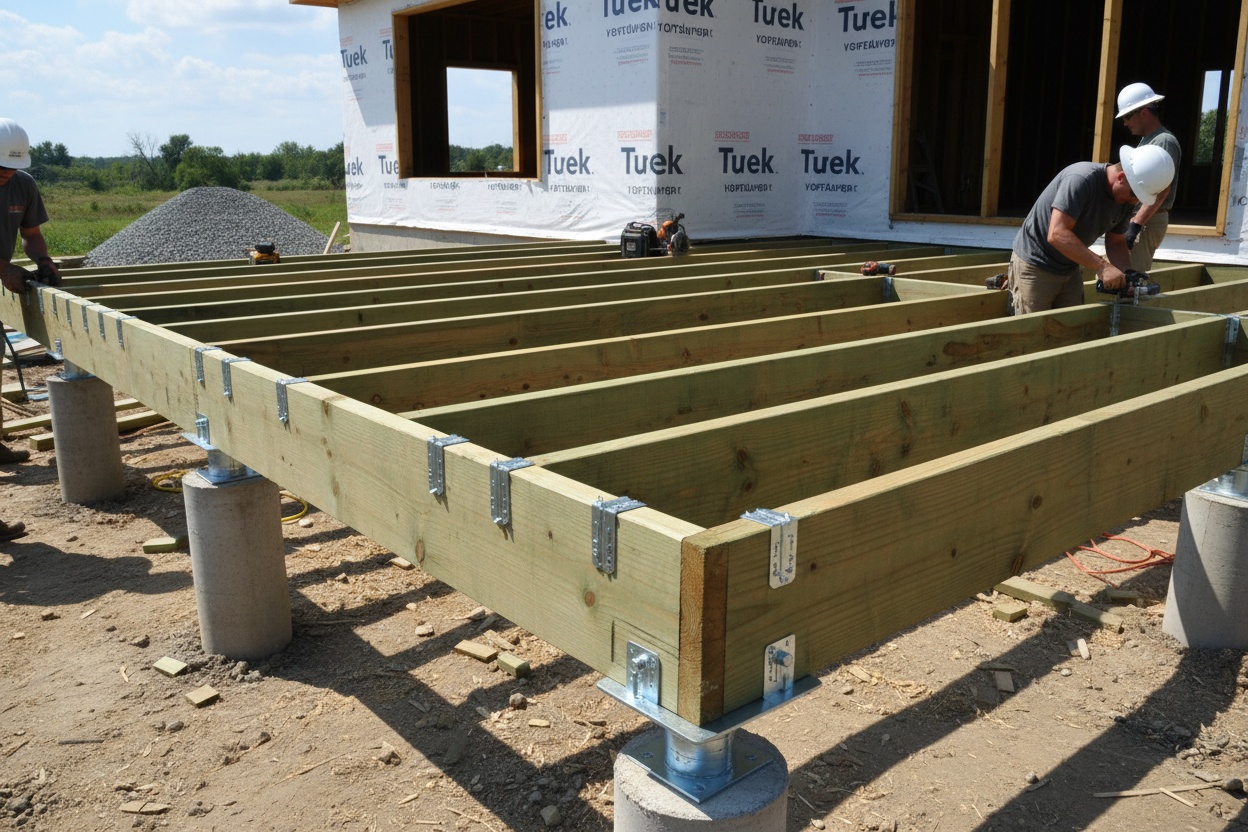
Concrete pier decay: Old piers that were poured without proper sonotube forms often crack and shift. Replacing: $200–$400 per pier. A typical deck has 6–12 piers, so this can add up quickly if multiple footings are compromised.
Termite damage: In Southern and coastal states, subterranean termites often feast on deck framing hidden from view. Termite remediation: $500–$1,500. Structural repair of damaged framing: additional $1,000–$3,000 depending on extent.
Why Flashing Matters
The single biggest predictor of rot damage is whether the original deck had proper ledger flashing. Flashing is a metal or membrane barrier between the ledger board and the house's rim joist that directs water away from the structure.
Before 2009, most building codes didn't require ledger flashing. If your deck was built before then, there's a high probability that water has been slowly infiltrating the connection point for years — even if the deck surface looks fine.
Signs of Hidden Rot (Before You Tear Off)
While you can't fully assess structural damage until the deck is removed, these visible signs strongly suggest rot underneath:
- Deck feels bouncy or spongy when you walk on it
- Ledger board area shows discoloration, staining, or paint bubbling on the house siding
- Posts are leaning or shifting from their original position
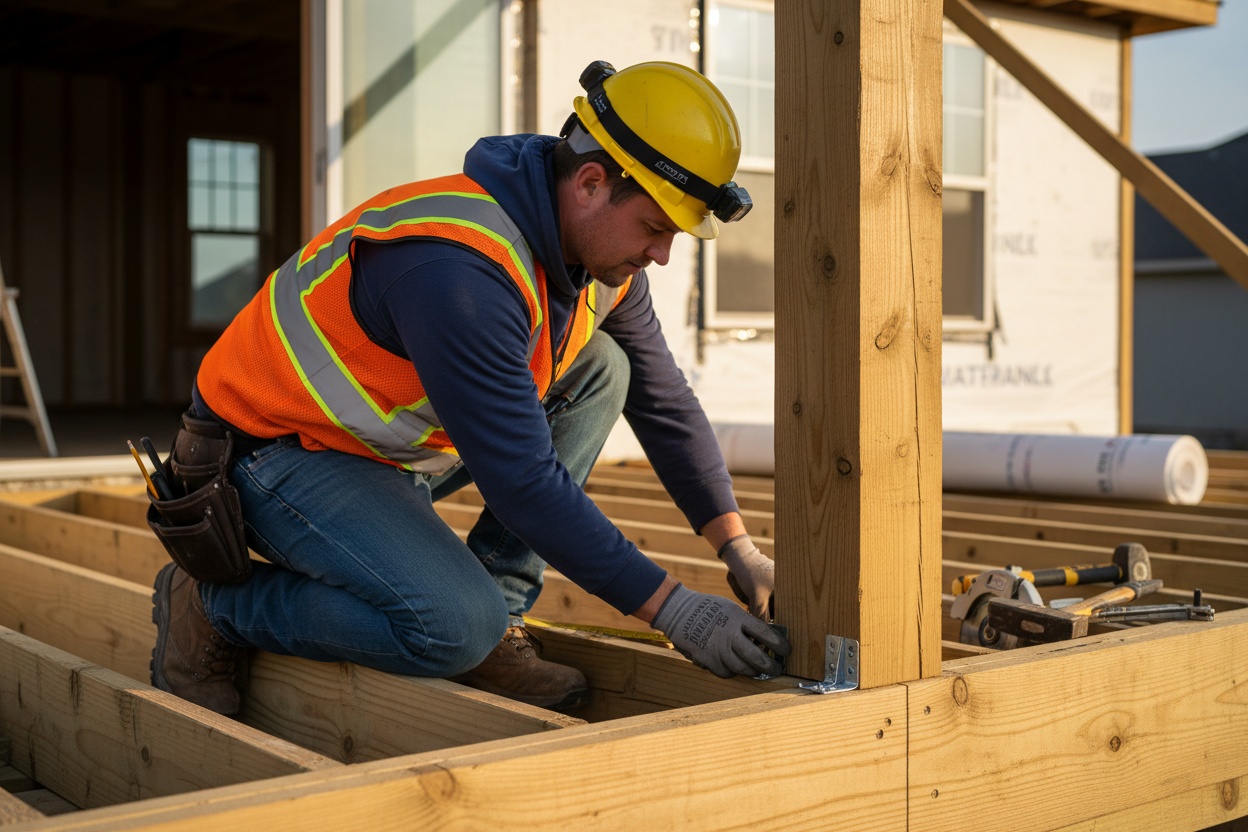
- Joist hangers are pulling away from the ledger
- Deck railing is loose or wobbly (suggests joist attachment points are weakening)
How to Protect Yourself
Any reputable deck contractor should include a "rot contingency" line item in their estimate — typically 10–15% of the total project cost. If your contractor's quote doesn't mention this, ask about it directly. A zero-contingency quote is a red flag, not a bargain.
For your new deck: Insist on proper stainless steel or aluminum ledger flashing, hot-dipped galvanized hardware, and pressure-treated lumber for all structural components. These measures add 5–8% to the build cost but prevent the rot tax from hitting the next homeowner — or you, if you keep the home long enough.